



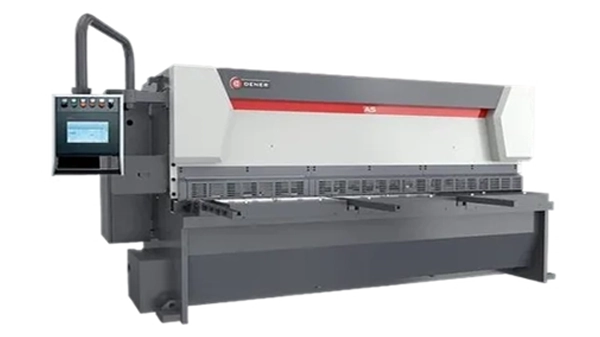
CNC Hydraulic Press Brakes for Sheet Metal
Ideal Solution for High-Performance Workshops and Industries
Introduction
CNC hydraulic press brakes are today one of the most effective and versatile solutions among machine tools for sheet metal processing. Thanks to CNC technology (computerized numerical control) and a solid structure, these machines ensure high precision, reliability, and flexibility, both in artisanal and industrial settings.
In this in-depth guide, you will discover how new and used press brakes work, what advantages they offer, which sectors they can be used in, and which accessories enhance their performance. We will also see how computer numerical control (CNC) and CNC programming help simplify production and reduce margins of error.
Finally, we will compare hydraulic press brakes with other CNC machines to help you choose the most suitable numerical control machine for your workshop or production line.
In this guide, you will learn how hydraulic press brakes work, where they are used, what advantages they offer, and which accessories improve their performance. We will also help you understand the differences with other technologies, so you can choose the machine best suited to your activity, whether artisanal or industrial.
What is a hydraulic press brake?
A hydraulic press brake is a machine tool used to bend sheets and metal materials, exploiting the power generated by a hydraulic system. This system uses a **hydraulic press pump**, which generates pressure in a closed circuit, operating a **hydraulic press cylinder**. The latter pushes a punch against a die (mold), creating the desired bend.
Hydraulic press brakes are widespread in many industrial fields thanks to their ability to work materials of various thicknesses with high precision. Everything is controlled by a numerical control (CNC), which allows programming angles, bending depths, and operational sequences precisely.
Main advantages of hydraulic press brakes
1. High pressing force
One of the main advantages of a hydraulic press is the ability to develop very high forces, often exceeding 100 tons. This allows bending even very thick or resistant materials while maintaining good precision.
2. Advanced CNC control
Thanks to numerical control, the operator can intuitively manage all working parameters: angles, depths, sequences, speeds, and returns. Furthermore, CNC systems allow saving work programs, reducing setup times. 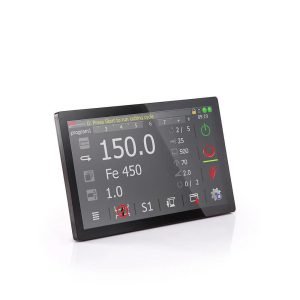
3. Durability and reliability
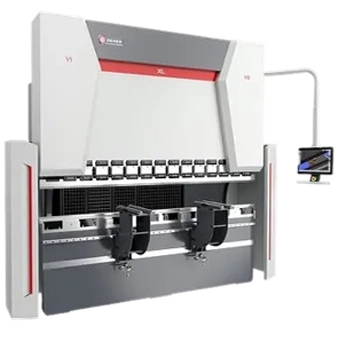
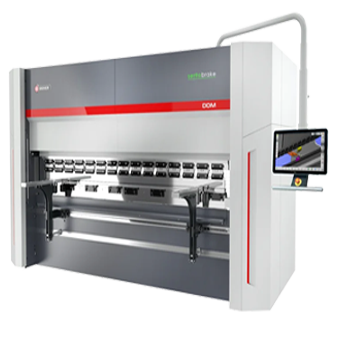
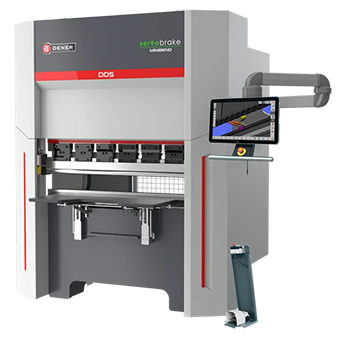
Dener press brakes, distributed by TPC, are made with high-quality materials and a solid structure. This guarantees stability during work, consistent precision over time, and long durability. Every component is designed to withstand wear, even during intensive and continuous production cycles.
4. Flexibility in workable materials
These machines are ideal for working sheets in steel, aluminum, stainless steel, and other metals. They offer excellent results with both thin and thick materials without the need to frequently replace tooling.
Where are hydraulic press brakes used?
Hydraulic press brakes are used in many production sectors, including:
- Metal carpentry
- Automotive sector
- Aerospace industry
- Metal furniture production
- Mechanical workshops
- Construction of electrical panels and cabins
- Manufacturing of hydraulic systems and piping
In particular, in contexts where bending is required, these machines integrate perfectly with equipment dedicated to the preparation and assembly of high-pressure systems.
Main components of a hydraulic press brake
To fully understand its operation, it is useful to examine the fundamental components:
- Hydraulic cylinder: converts oil pressure into linear motion.
- Pump: generates the oil flow in the circuit.
- Hydraulic press manometer: measures and regulates system pressure.
- Hydraulic power unit for press: includes motor, valves, and tank.
- Supporting structure: ensures mechanical strength.
- Numerical control (CNC): allows programming of operations.
- Accessories for hydraulic presses: include molds, supports, and measuring devices.
Available types and models
Dener press brakes are available in different models, differentiated by tonnage and bending length:
- Hydraulic press 30 tons – Compact and ideal for mechanical workshops.
- Hydraulic press 50 tons – Versatile for light and medium carpentry.
- Hydraulic press 100 tons – Powerful and reliable for industrial production.
These models can be further customized with **accessories**, **quick clamping systems**, and **safety devices** to ensure efficient use and compliance with CE regulations.
Differences compared to other types of presses
Manual hydraulic press
The **manual hydraulic press** is useful for small workshops and occasional operations but does not offer the same power or precision as an automated CNC machine.
Bench hydraulic press
The **bench hydraulic press** is compact, often portable, suitable for simple operations like bearing insertion or light bending. However, it is limited in terms of force and automation.
How to choose the right hydraulic press?
1. Evaluate the expected production
It is important to know how many pieces per day you intend to work on and with what type of material.
2. Define the thicknesses to bend
The higher the thickness, the greater the tonnage required.
3. Consider the available space
Models range from compact bench presses to large structures for industrial use.
4. Verify compatibility with other systems
If you work with pipes, fittings, or hydraulic systems, choose a press compatible with your accessories.
Maintenance and safety of hydraulic press brakes
One of the fundamental features of every machine tool is its **maintainability**. Hydraulic press brakes require regular maintenance, but it is simple to perform. Here are some aspects to consider:
- Hydraulic oil check: it is essential to monitor its level and quality. Degraded oil can compromise the performance of the hydraulic press piston.
- Inspection of pipes and fittings: prevents pressure leaks and performance drops.
- Verification of the hydraulic press manometer: a vital safety tool that must always be kept accurate and functional.
- Cleaning of guides and molds: fundamental to avoid jams or inaccurate bends.
**Safety** is another critical element. Modern presses, like those offered by Dener, are equipped with **photocells, safety barriers, and emergency stops**, but it is essential to train operators and comply with European regulations (ISO, CE, EN12622).
Available accessories and options
A **hydraulic press for workshops** can be customized to fit different production contexts thanks to a wide range of **accessories for hydraulic presses**, including:
- Quick clamps for punches and dies
- Adjustable front supports
- Laser systems for centering
- Ergonomic and programmable pedals
- CNC software extensions for 3D simulations
In particular, for those working in the **high-pressure hydraulic tubing** sector, there are **press-fit hydraulic fittings** that can be combined with sheet bending to build supports, flanges, and brackets directly in the workshop.
The hydraulic press in the context of portable solutions
Increasingly in demand are **portable solutions**, especially for on-site interventions or maintenance. In these cases, **mini hydraulic presses** and **portable hydraulic tube presses** allow quick operations with reduced bulk. Although less powerful than bench machines, they are extremely practical.
An example? In agricultural maintenance, portable manual hydraulic presses are used to assemble hydraulic hoses for tractors or mobile systems, providing immediate results.
Technological evolution of hydraulic presses
The technology behind **workshop hydraulic presses** has made great strides. Today, the most advanced models integrate:
- Brushless energy-saving motors
- Silenced pumps
- Intuitive touchscreen interfaces
- IIoT (Industrial Internet of Things) connectivity for predictive maintenance
- Integration with CAD-CAM software for automated bending
These features make Dener presses among the most advanced on the market. TPC Srl, as the official dealer, can configure every machine according to the specific customer requirements.
The importance of pre-sale consultation
Purchasing a **hydraulic press brake** is not only a technical matter but also a strategic one. Choosing the wrong model can mean:
- An undersized machine unable to handle real loads.
- An oversized machine that consumes more energy than necessary.
- A system incompatible with existing production flows.
For this reason, TPC offers a complete **pre-sale analysis** service, where a specialized technician evaluates:
- Material characteristics
- Production volume
- Available space
- Required flexibility
- Budget and expected ROI
This consultative approach ensures **a correct, durable, and productive investment**.

Showing 1–12 of 13 resultsSorted by latest
-
View Product
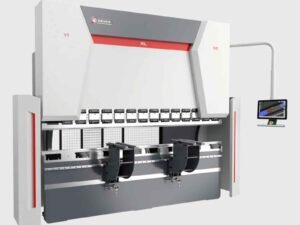 Power:100 TonNumerical control:Esa 840Year:2025
 -
View Product
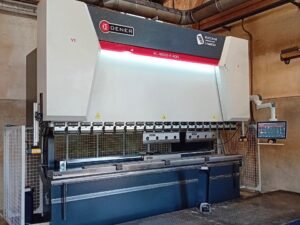 Power:400 TonNumerical control:Esa 875Year:2025
 -
View Product
 Power:40 - 600 TonNumerical control:DELEM DA 66TYear:2025
 -
View Product
 Power:40 - 600 TonNumerical control:Esa 840Year:2025
 -
View Product
 Power:40 - 600 TonNumerical control:Delem, ESAYear:2025
 -
View Product
 Power:135 TonNumerical control:Esa 875 WYear:2025
 -
View Product
 Power:175 TonNumerical control:Esa 875 WYear:2025
 -
View ProductPower:60 TonNumerical control:Esa 840Year:2025
-
View Product
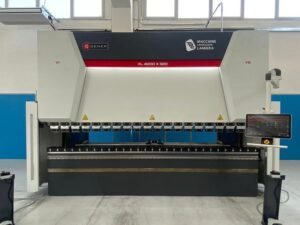 Power:320 TonNumerical control:Esa 875Year:2025
 -
View Product
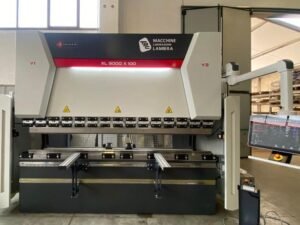 Power:100 TonNumerical control:Esa 840 WYear:2025
 -
View Product
 Power:135 TonNumerical control:Esa 875 WYear:2025
 -
View ProductPower:175 TonNumerical control:Esa 875 WYear:2025